
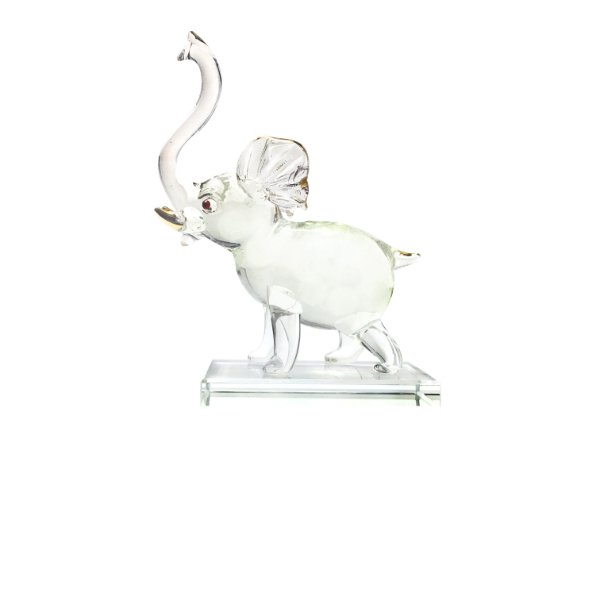
Crystal elephant sculpture

Ursprünglicher Preis war: 35,00 €21,00 €Aktueller Preis ist: 21,00 €.
The elephant is widely recognized as a symbol of wisdom, strength and memory in many cultures around the world. In interior design and artwork, the elephant is often used to symbolize stability, reliability and dignity.
- Crystal Elephant
- Handcrafted. Unique piece
- Length : 9 cm Height : 8 cm
Today, crystal manufacturing takes place according to the original techniques. Thus, the mixture of sand, potassium carbonate and lead oxide is brought to a temperature of 1450°C. The molten bath is then “matured” for several dozen hours. The goal is that all the carbonate decomposition bubbles, which help to make the mixture homogeneous, are eliminated.
The mixture is then ready to be worked by pickers, blowers and tailors. And this, in accordance with the rules of art and know-how of high-end crystal making.
A little history: Crystal makers, like glassmakers, first established themselves in wooded areas. Indeed, these areas provided the wood to heat the smelting furnaces and even the ashes which provided the potassium.
In these remote areas, royal privilege allowed them to carry the sword to defend themselves. In France, the history of crystal begins in Lorraine with the Münzthal glassworks founded in 1586. However, it was only in 1767 that King Louis XVI conferred on it by letter patent the title of “Royal Glassworks of Saint-Louis”. In 1782, François de Beaufort developed the formula for crystal with more than 35% lead.
Schreibe die erste Bewertung für „Crystal elephant sculpture“
Ähnliche Produkte

Bestiary

Bestiary


Bestiary


Bestiary


Bestiary

ART EDITIONS

Bestiary
Bewertungen
Es gibt noch keine Bewertungen.